
Featured Artists
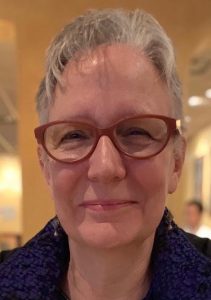
Catherine Suttle
Abstract Interiors
Catherine lives in a Delaware River town. Her paintings evolved from a decade of making clay sculpture. She focuses on the potency of color; provide surprise and awkwardness in an environment of equilibrium; and engross the viewer who notices their subtle nuances.
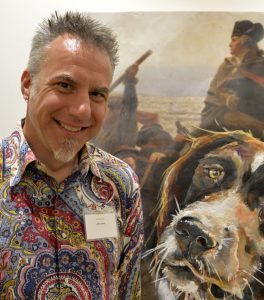
Jeff Schaller
“Using lost and found images, words and language, my goals are to paint with a precision and intricacy not normally found in encaustic paintings. My approach is with a vision towards expressionistic and contemporary. Instantaneously setting powerful brush strokes that evoke an emotional connection of the viewer to the past and reflect on their sensibility in the present as a result of their memory. I want people to bring their own thoughts and feelings into my artwork. I paint using things that already exist, this is what feels true to me. I need to reflect on culture, past and present, as an arbiter of interpretation. Others have created and have only touched on, merely scratched the surface. I then explore the subtle nuances of language and life. I need to explore, as I begin to paint, I let my mind wander into a free association. I define my oeuvre with compositions, which are provocative and whimsical. It is my intent to propel the viewer into scenes of seemingly unrelated subjects, contained within a captivating and complex sonatas. The simultaneous expressions are pop and edgy, esoteric and direct, unrelated and curiously similar, creating a visual language of paradox and juxtaposition. I want to provoke an emotional response from the viewer.
I paint with a beeswax-based paint mixed with pigment and kept molten while painting, this process is called encaustic. The word encaustic comes from the Greek meaning to “burn in”, which refers to the process of fusing the paint. This type of painting was used in the 5th century B.C. for weathering boats and coloring marble. Encaustic is the most durable of the artist’s paints because the beeswax is impervious to moisture. Thus, it will not deteriorate, yellow or darken and it can be polished to a high gloss for a brilliant finish. The paintings do not have to be varnished or protected by glass. The beauty in the paint is found in its immediate drying time. Because it cools immediately, the gesture and brush stroke are captured. Silkscreen is also incorporated into my work. Silkscreen was derived from a stencil process and has been used by sign painters since 1938 for labeling posters, bottles and fabrics. A nylon mesh (screen) is stretched over a wooden frame, coated with a photographic emulsion and an image is burned into the light-sensitive emulsion. The framed screen is placed on the surface to be printed, and ink is pressed through the framed screen with a rubber squeegee. This process requires separate screens for each color. The image can then be duplicated using the various screens.”
Biography
Jeff received his Bachelor of Fine Arts from the City of London Polytechnic, London, England. His work has been exhibited throughout the United States. He is frequently published in magazines and newspapers, chosen for juried art exhibitions and selected for special projects, commissions and murals. He has worked on a 30 feet mural for the Philadelphia Arts Commission placed in their transportation centers. His work can also be seen on the set of “Friends” for the 2002 and 2003 season. In 2002, Schaller received a highly coveted fellowship from the Common Wealth of Pennsylvania. In 1998, Schaller was the recipient of the prestigious Philadelphia Museum of Art Purchase Award. Schaller is a philanthropic and committed artist who lives in Pennsylvania with his wife and three children.